No Asteroids: What a 2-Hour Run Reveals About Days 1–29
A full 2h18 launch-week run in numbers: the real tool and gun price ladder, why days get longer, and why only 8% of the asteroid was gone by day 28.
Most No Asteroids guides are written from the store page and a few screenshots. This one is built from a full two-hour run. Sonoket recorded 2:17:41 on a pre-launch review key, starting at day 1 and stopping at day 29 with 62 days left on the clock. That is long enough to see the entire early economy, the first real grind wall, and the moment the ship starts doing the work.

90 Days to Mine an Asteroid — Part 1 (Sonoket)
One caveat before any number: the run predates release. Prices and balance were recorded before patches 1.0.2 to 1.0.10, so treat the figures as launch-adjacent, not as the 1.0.10 workshop. Where the video and the current build could differ, this page says so.
What does two hours actually cover?
Day 1 to day 29 of 90. The impact counter falls from 90 to 62, and the player ends by buying an Orbital Strike — his first late-game gun — with a missile swarm and a Collapser still far out of reach.
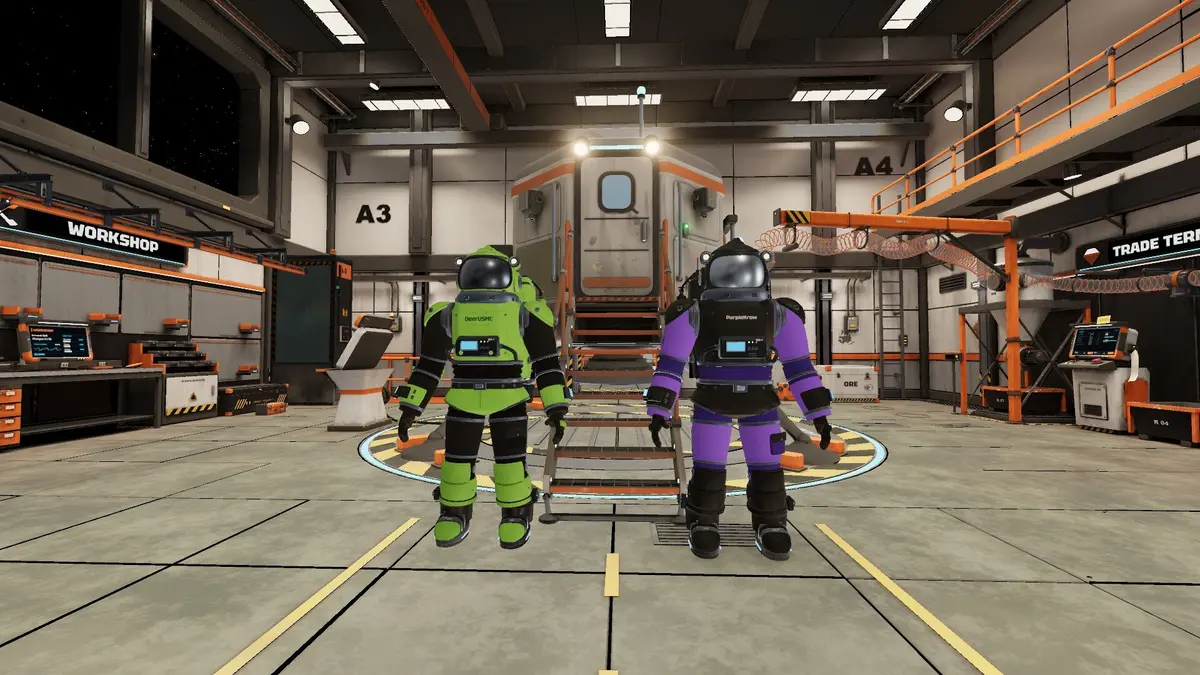
The route is solo and unglamorous: land, dig, sell, upgrade, repeat. There is no co-op, no bots, no second asteroid. What makes it useful is the shopping list. By day 29 he has bought almost every early and mid-game item, and the receipts are on screen.
The real price ladder
The store page never publishes prices. A run does. Here is what the workshop charged on the pre-launch build:
| Item | Price seen | When |
|---|---|---|
| Lander cargo hold | $70 | First hour |
| Sledgehammer | $500 | After the first sales |
| Drill | $2,000 | Day 2–3 |
| Boots (four tiers) | $100 / $140 / $180 / $250 | Mid-run |
| Ship hold | $15,000 | After the Laser |
| Laser | $42,000 | The first wall |
| Plasma Cutter | $125,000 | Day ~25 |
| Gun port unlock | $100,000 | Late in the run |
| Orbital Strike | ~$250,000 | Day 28 |
| Missile Swarm | $600,000 | Not bought |
| Singularity cannon | $1,000,000 | Not bought |
| Collapser | $1,200,000 | Not bought |
Two things stand out. First, the jump from the Drill at $2,000 to the Laser at $42,000 is twenty-one times the price — that is the actual difficulty curve, not a smooth ladder. Second, the endgame guns are priced in the millions, which is why the run ends with one Orbital Strike and three aspirational weapons.
Treat every figure as community-recorded on a pre-release build. The patch notes show balance changes since, and your own workshop is the only price that matters.
Why days get longer
The run averages about 4.2 minutes per in-game day — 28 days in roughly 118 minutes. But the average hides the curve: the first two weeks run at about 2.6 minutes a day, and from day 17 the pace is closer to 5.9 minutes.
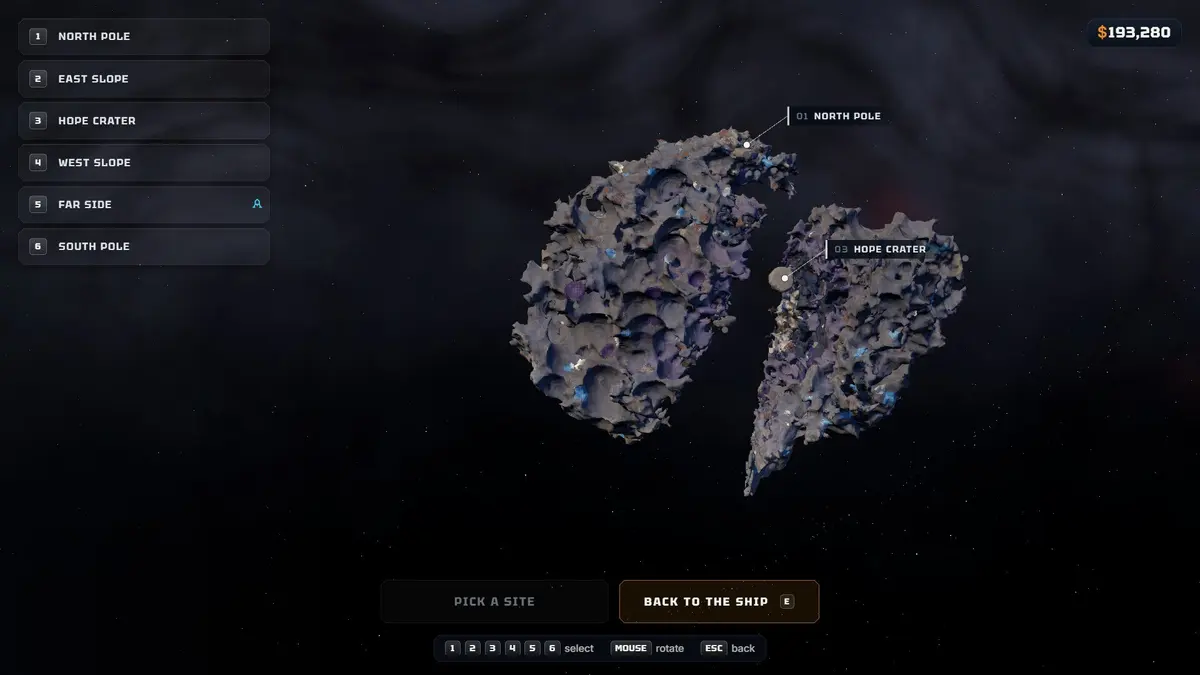
The reason is that the shift sets the day. A day ends when you return, sell and sleep, so a longer air tank literally makes the day longer. Early on, a full shift opens at around two minutes of outside time; after the first tank it roughly doubles. That is why “one trip is one day” is the most useful planning sentence in the game, and why the air guide treats air as the first upgrade rather than a comfort purchase.
The 8% problem
At day 28, with a Laser and a Plasma Cutter, the counter reads 8% mined. That sounds like failure. It is not — it is the shape of the game.
Hand tools remove a pocket. Ship guns remove volume continuously while you dig, and drones work the face without you. The run’s own numbers show it: the Laser unlocks the mid-game, but the counter only starts moving in chunks after the first turret and autocannon come online. If you are judging progress by how fast your pickaxe swings, you are measuring the wrong thing. The weapon database is the better place to look.
The first hour, in purchase order
The opening is almost a recipe, and it matches the upgrade order guide step for step:
- First air tank. The player says it “doubled the amount of air” and immediately notices shifts opening at ~2 minutes instead of ~1.
- Cargo. A $70 lander hold, then capacity upgrades — 90 → 135 → 203 → 1,000 over the run.
- Sledgehammer at $500, then Drill at $2,000. The first tool step changes what rock is worth stopping for.
- Tether, scanner, jetpack. Utility, not damage. The scanner is the single biggest quality-of-life change in the first hour because it shows whole deposits through rock.
- First drone and the first turret. The moment the ship starts contributing.
The mistake to avoid is buying the Drill before air and cargo. The run does it in the right order and every later purchase is funded by the longer, fuller trips those first three unlock.
The daily task is the hidden multiplier
The HUD contract in the top-left is separate from the terminal’s daily order, and the run treats it as the main early income source: sample from 21 m for $200, 60 space ice for $300, cover 450 m, dig 9,900 m, break three loose pieces. The player’s own note after missing one is the lesson: “I wish I had seen that at the start.”
Read the task before you descend. It costs ten seconds and often pays more than the ore you were planning to chase.
Market timing and the refine ladder
Prices are not static per day so much as per mineral. The run shows a screen with one mineral down 28% and another up 35%, and Plasmite down 23% on the day he sells. Selling a large stack moves the price immediately — his words: “down to 22 if I sell it.”
Two practical rules come out of that. Refine before selling once the option exists (the run climbs from +12% to +25% and has more levels left), and do not dump a full hold of one mineral into a down day if you can sell a mixed load instead. The selling guide covers the mechanics; the video is the demonstration.
Five mistakes the player names
- Deep vertical holes. “A very real chance that we do not make it out.” Spiral, don’t shaft.
- Accidental launch. He fires the lander early once and loses the whole shift; cargo cannot be dumped at the lander, only sold after the flight home.
- Forgetting charges. Charges do not regenerate. Restock every trip.
- Treating the tether as unlimited. It has a range, and “tether out of range” happens twice in the run.
- Selling into a down market because you need the money. Sometimes forced, but plan the big purchases around it.
What still applies in 1.0.10
The structure is unchanged: 90 days, one trip per day, air and cargo as the two limits, guns that fire while you dig. 1.0.10 added co-op customization, Photo Mode and password sessions rather than economy changes, so the purchase logic above still holds.
What may not hold are the exact prices and the size of the grind wall. The run is a pre-launch build; patches since then changed tool balance, co-op pricing and the late-game gun line. Use the numbers as a shape, not a shopping list, and check the terminal and workshop in your own build before committing a week of shifts.
If you want the compact version of the same advice, the beginner guide is the one-page route; this run is the evidence behind it.
Gallery
FAQ
How long is one in-game day in No Asteroids?
How much does the Laser cost?
Is 8% of the asteroid normal by day 28?
What is the best early purchase in the run?
Related Articles
guides
No Asteroids 90 Days Guide: How the Clock Really Works
How the No Asteroids 90-day contract works: what the counter measures, which actions spend a day, a ten-day spending plan and how to fix a run that is behind.
guides
No Asteroids Selling Ore: Terminal, Refine and Daily Orders
How selling ore works in No Asteroids: the terminal beside the lander, the refine uplift, daily orders, glut, and when to sell every trip or bank a haul.
guides
No Asteroids Tips: 15 Habits That Save In-Game Days
Fifteen No Asteroids tips that actually save time: quarter-bar returns, cargo before speed, daily bonuses, gun timing and the habits that prevent blackouts.
Was this helpful?
Thanks for the feedback!